Posted on

Plants of the Week 18th April 2026 Comfrey

🌿 Plants of the Week:
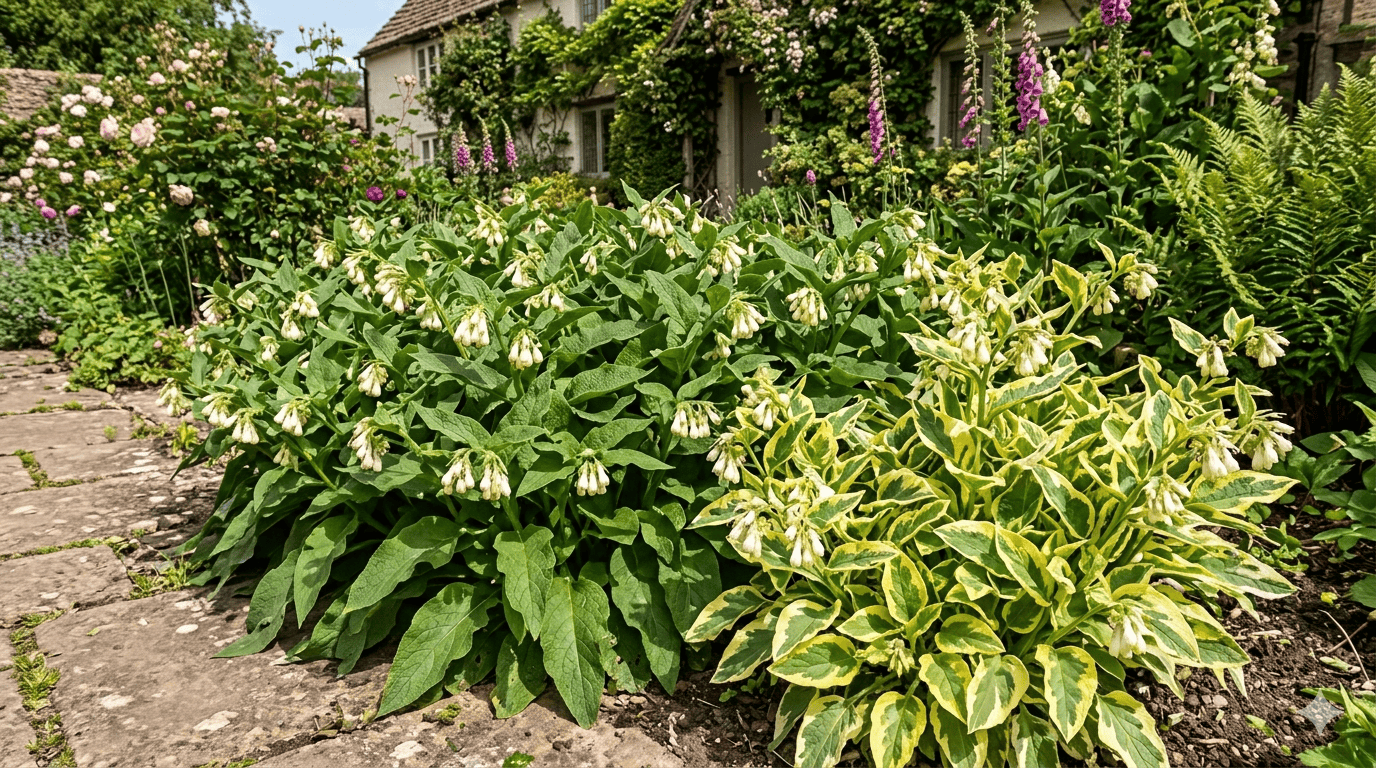
Symphytum grandiflorum & Symphytum grandiflorum ‘Goldsmith’

You might know comfrey as a gardener’s secret weapon – but these ornamental varieties are beautiful too.

Symphytum grandiflorum
– Clusters of creamy-yellow, bell-like flowers in spring
– Neat, ground-covering habit – perfect for tricky shady spots
– Evergreen-ish in mild UK winters

✨ Symphytum grandiflorum ‘Goldsmith’
– Same great flowers + gorgeous gold‑edged variegated leaves
– Brings light to dark borders and container edges
– A real foliage standout even when not in bloom

But here’s the clever bit ☝️
Both are fantastic “dynamic accumulators” – their deep roots pull up nutrients, and you can chop & drop the leaves to make free, organic liquid plant food (great for tomatoes, veg, and hungry perennials).

Many people consider the white flowering comfreys to be edible but we don’t recommend consumption of any comfrey plants due to the high levels of pyrrolizidine alkaloids which can harm the liver.

External use of a poultice made from the mashed up leaves is supposed to ease aches and pains and relieve sprains & bruises.

So you get:
✅ Ornamental ground cover
✅ Pollinator friendly (bees love the flowers)
✅ Your own home‑grown fertiliser factory

👉 Where you can find us

#PlantOfTheWeek #SymphytumGrandiflorum #ComfreyGoldsmith #OrnamentalAndUseful #UKGardening #NaturalFertiliser #GroundCoverPlants #BeeFriendly #PermacultureUK #EdibleGardenHelpers

#GrownInLincolnshire #BeeFriendlyPlants #ShopLocal #grownnotflown #HardyPerennials #UKGardening #supportlocal #plantlover #lowcarbonfootprint #lincolnshirebusiness #grownwithlove #supportlocalbusinesses #plantsmakepeoplehappy #growninlincolnshire #growninbritain #shoplocal

Posted on Leave a comment

Cultivate Your Own Oasis: A Guide to Setting Up a Raised Bed Veg & Herb Garden in Small UK Spaces

Here in the UK, where gardens are often compact and weather unpredictable, raised bed gardening offers a smart solution for growing fresh vegetables and aromatic herbs. Perfect for patios, courtyards or tiny backyards, raised beds maximize space, improve soil & drainage if necessary, and bring gardening within reach—literally. Here’s how to create your own thriving edible garden, even in the smallest of spaces.

Why Raised Beds?
– Superior Drainage: Ideal for our wet, rainy climate, raised beds prevent waterlogging.

– Soil Control: Tailor soil to your plants’ needs, avoiding heavy clay or sandy soils common in parts of the UK.

– Space Efficiency: Grow more in less space with strategic planting.

– Accessibility: Less bending—raised beds make gardening more accessible.

Choosing Your Spot
– Sunlight: Aim for a spot with 6+ hours of sunlight daily. South-facing areas are ideal.

– Shelter: Position away from wind tunnels; use fences or trellises as windbreaks.

– Flat Ground: Ensure stability and even water distribution.

Building Your Raised Bed
– Materials: Use untreated, rot-resistant wood (e.g., cedar) or recycled plastic. Avoid railway sleepers as they may have been treated with tar or toxic creosote.

– Size: Opt for 1.2m x 1.2m beds—wide enough for plants, narrow enough to reach the centre.

– Height: 30cm suits most veggies; go taller (45cm) for deep-rooted plants like potatoes.

– Assembly: Secure corners with screws or metal brackets. Line the base with landscape fabric to deter weeds.

Many UK garden centres and online retailers sell affordable raised bed kits if you cannot make your own.

Soil: The Foundation of Success
– Mix: Combine 60% topsoil, 30% compost (use good quality peat-free to protect peat bogs), and 10% grit or sand for drainage.

– Enrich: If available incorporate well-rotted manure or leaf mould for nutrients.

– Drainage Layer: Add a 5cm gravel layer at the base if your area floods.

Choosing Plants for Small Spaces
Vegetables:
– Quick Crops: Radishes, lettuce, spinach. Grow loose leaf lettuces as they can be harvested “a leaf at a time”, picking what you need & leave the plant to grow.

– Compact Varieties: Dwarf French beans, ‘Patio Pride’ peas, round carrots.

– Vertical Growers: Climbing cucumbers or runner beans (add a trellis).

Herbs:
– Sun-Lovers: Plant low growing herbs such as thyme at the bed’s edge and taller growing herbs towards the middle or back. Winter Savory is an attractive perennial with stronger taste to the annual Summer Savory making it a perfect addition.

– Partial Shade: Parsley, mint (bury mint in pots to prevent them taking over).

– Annuals: Basil, coriander.

Companion Planting: Pair marigolds with tomatoes to deter pests or grow garlic near plants susceptible to aphids.

Planting Tips
– Succession Planting: eg after harvesting spinach in spring plant kale for winter.

– Vertical Space: Use obelisks or canes for peas or beans. After harvesting cut the stems back leaving the roots in the ground as they will supply nitrogen to the soil.

Herb Garden Hacks
1. Perennial Herbs: Plant rosemary, thyme, and sage once—they’ll return yearly.

2. Containers: Use pots within the bed for invasive herbs (mint) or to rearrange seasonally.

3. Harvesting: Snip herbs regularly to encourage bushy growth. Dry surplus for winter.

4. Site near the kitchen door if space allows for ease of picking.

Maintenance Made Easy
– Mulch with straw to retain moisture.

– Feeding: Use organic seaweed feed every 4–6 weeks.

– Pest Control: Cover beds with netting to deter cabbage moths. Encourage ladybirds with calendula flowers.

– Winter Care: Protect beds with cloches or horticultural fleece in frosty weather.

Final Thoughts
A raised bed garden transforms even a postage-stamp plot into a productive haven. Start with one bed, experiment with herbs and veggies you love, and soon you’ll be savouring homegrown salads and garnishes. Whether you’re in a city flat with a balcony or a cottage with a compact yard, raised beds bring the joy of gardening – and fresh flavours – to your doorstep.

 

Posted on Leave a comment

Iris chrysographes Black Form

We took advantage of the better weather today to lift and divide our Iris chrysographes Black form plants. These are beautiful Iris plants with flowers of such a dark purple they’re very nearly black!

Even with the recent cold weather there were signs of fresh growth buds. We have put the pots into a cold frame to protect them whilst they settle in.

Posted on Leave a comment

Behind the scenes…

Although we are not currently attending markets there is a lot going on in preparation for spring. From tidying up stock plants in our garden, vehicle maintenance, seed sowing, taking cuttings, lifting and dividing plants, potting up, the list is endless.


We are also booking events & markets for the coming season so if you know of an event or market that you think would be a good fit for us please let us know. We are actively updating our calendar. If you want to be kept updated with all the events we are attending you can subscribe to the calendar if you use Google Calendar, iCalendar (Apple), Outlook 365 or Outlook Live, there is a link on the bottom right hand side of the page. Unfortunately Ruskington Farmers Market and the Wednesday Saxilby Farmers Market are not going ahead this year but the Saturday Saxilby Farmers Market will continue on the 2nd Saturday of the month.


I have also been busy with my carpentry skills creating cold-frames to keep the worst of the winter wet off some of our potted plants. Alpines especially are susceptible to wet conditions which can be a problem when pot grown. They will tolerate almost any amount of cold but only if well drained. A cold frame or alpine house is essential if you are on heavy clay as we are…

Posted on Leave a comment

Mint

We love mint here at Sturton Plants and stock many varieties. Our favourite use is mint tea using Moroccan Mint closely followed by Mint Sauce. What’s your favourite way to use mint? Any recipes to share?

It is widely agreed that mint can help digestion. Many people believe it has calming properties and promotes a good night’s sleep. We always finish every day with a cup of mint tea. In fact there are many herbal claims & uses for mint including cleansing the skin (it is mildly astringent), helping ease sore throats and peppermint is even claimed to keep insects away.

We’d love to hear your favourite use for any types of mint plant including lotions, cocktail recipes, recipes, etc and will publish the best on this site.