
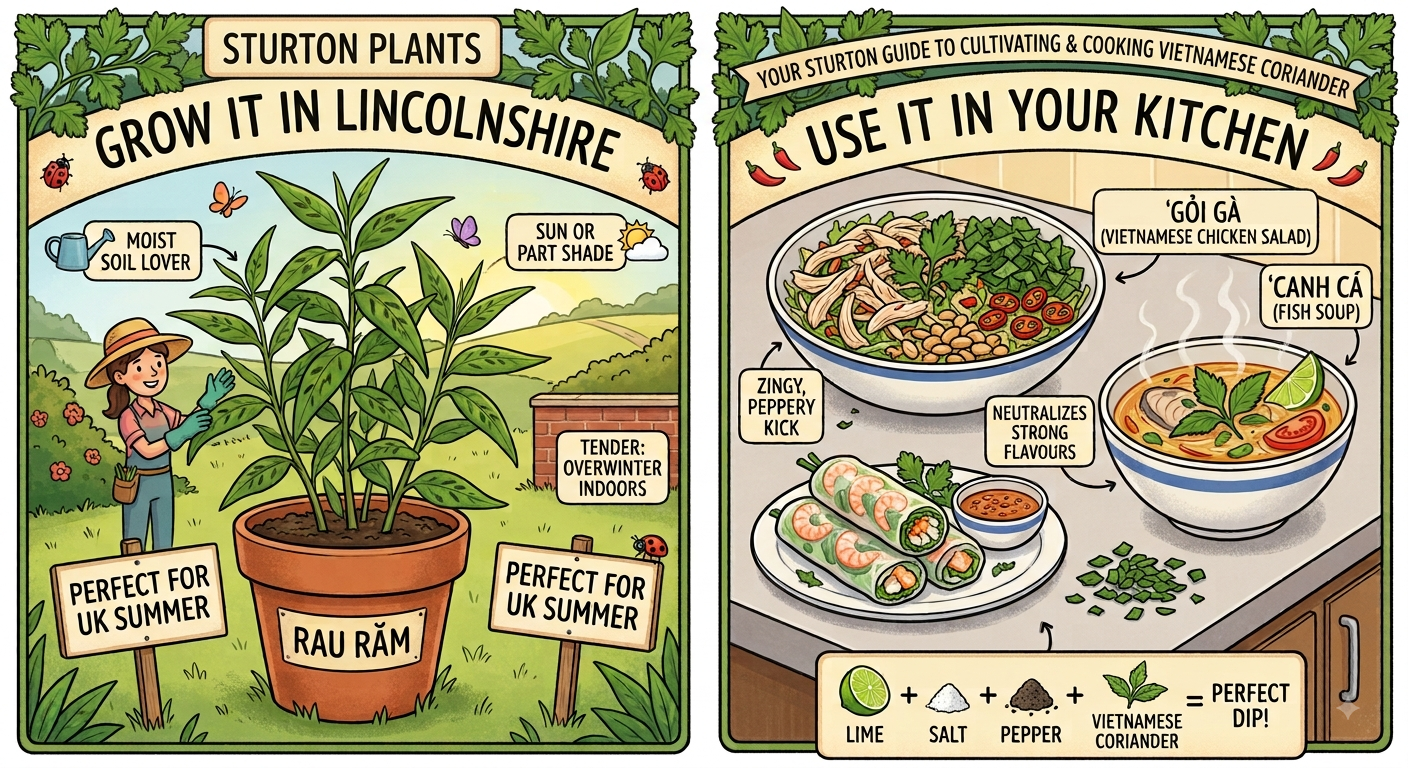
Vietnamese coriander (Persicaria odorata) is a wonderfully fragrant herb that brings an authentic taste of Southeast Asian cuisine to your kitchen. Known as Rau Răm in Vietnam, this plant has a distinct, peppery, and citrus-like flavour that is essential in dishes like pho, laksa, and fresh summer rolls.
Unlike common coriander, which can quickly bolt and go to seed, Vietnamese coriander is a heat-loving perennial that holds its flavour for months. Here is our guide to growing and using this wonderful herb in Lincolnshire.
How to Grow Vietnamese Coriander
Hardiness in the UK:
It’s important to know that Vietnamese coriander is a tender perennial. In our climate, it is not fully hardy and will not survive a cold, wet Lincolnshire winter outside. However, with a little care, you can enjoy fresh leaves from spring through to autumn, and even all year round if you bring it indoors.
Ideal Growing Conditions:
Aim to mimic its tropical origins for the best results.
· Light: Thrives in full sun to partial shade. In the UK, a sunny, sheltered spot is ideal.
· Soil: Prefers rich, fertile, and well-draining soil. Adding plenty of organic matter or compost will help it thrive.
· Water: This is a thirsty plant! It likes consistently moist soil and doesn’t tolerate drying out. Water regularly, especially during dry spells.
· Temperature: Optimal growing temperatures are between 18-29°C (65-85°F). It is frost-sensitive and must be brought indoors before temperatures drop below 10°C.
Propagation: Late summer, cut a 10-12cm stem, remove the lower leaves, and place it in a glass of water. Roots will appear within 5-10 days.
Care Tips for a Bountiful Harvest
· Pruning: Don’t be afraid to cut it back! Regular trimming encourages bushy growth and prevents the stems from becoming woody and leggy. If it stops producing new leaves in midseason, cut it back almost to the base to promote fresh growth.
· Feeding: Apply a balanced liquid fertiliser every 4-6 weeks during the growing season to keep it vigorous.
· Overwintering: This is the key to success in Lincolnshire. The best approach is to grow it in a pot, which you can move to a sheltered spot, like a greenhouse, conservatory, or sunny windowsill, before the first frost.
· Pests & Diseases: Happily, this plant is generally pest and disease-free. Keep an eye out for aphids or red spider mites, especially if you bring it indoors.
Harvesting and Using Vietnamese Coriander
Begin harvesting leaves about two months after planting in spring. You can pick leaves as needed, using them fresh for the best flavour.
· Culinary Uses: This herb is a star in Southeast Asian cooking. It pairs beautifully with fish sauce, lime, chilli, garlic, and roasted peanuts.
· Soups & Stews: Add fresh leaves to pho or other noodle soups just before serving, or stir them into a beef and bean sprout soup for a fragrant finish.
· Salads: Tear the leaves into fresh salads with cucumber, mango, or use them in a classic Vietnamese chicken salad (Gỏi gà).
· Stir-fries: Use it as a vibrant garnish for stir-fries and curries.
Health Benefits
Beyond its culinary appeal, Vietnamese coriander is also packed with nutrients and beneficial properties. It is known to be high in beta-carotene, vitamin C, calcium, and iron. It also contains flavonoids, which act as antioxidants.

